Memento navibus
Devon, UK
2026
WORK IN PROGRESS
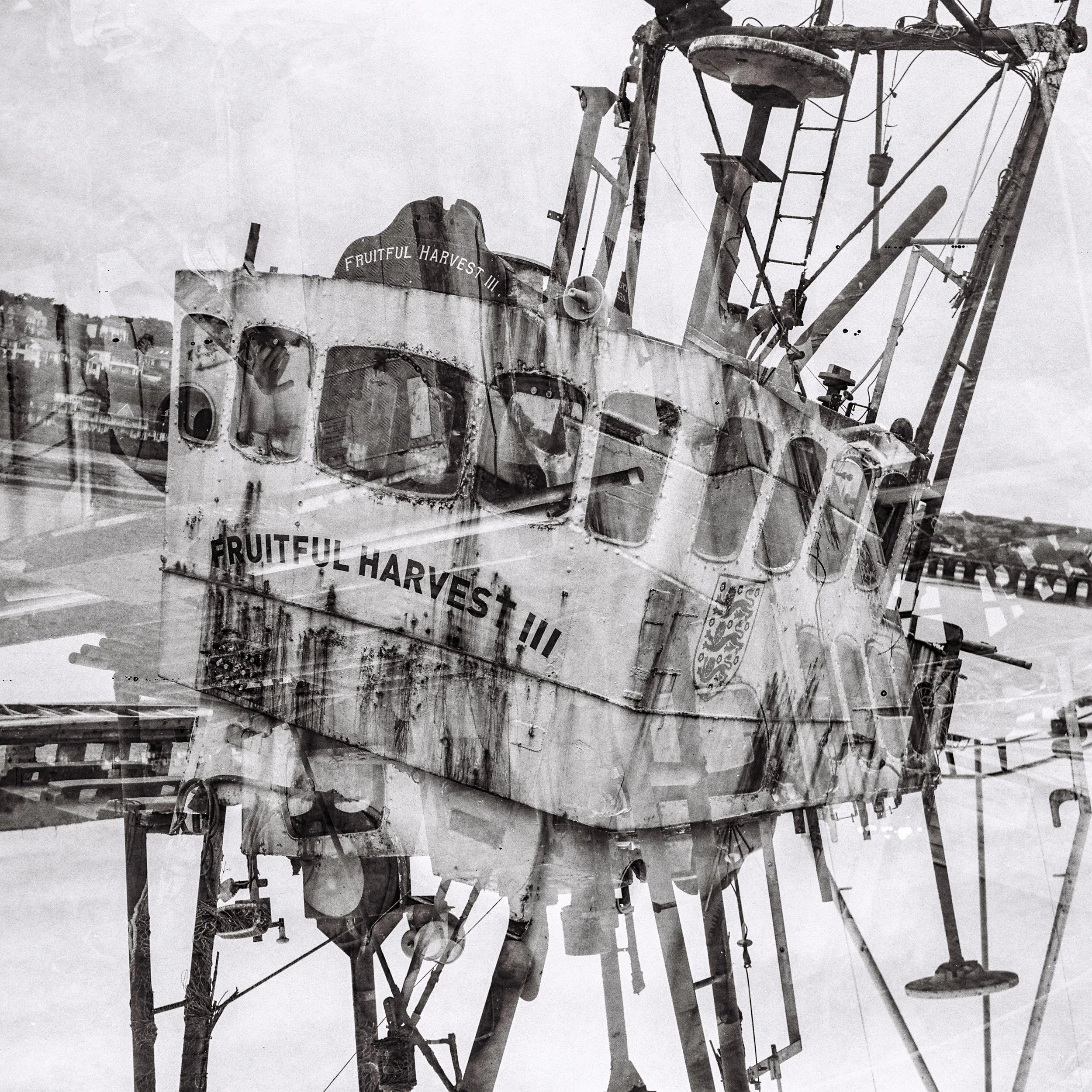
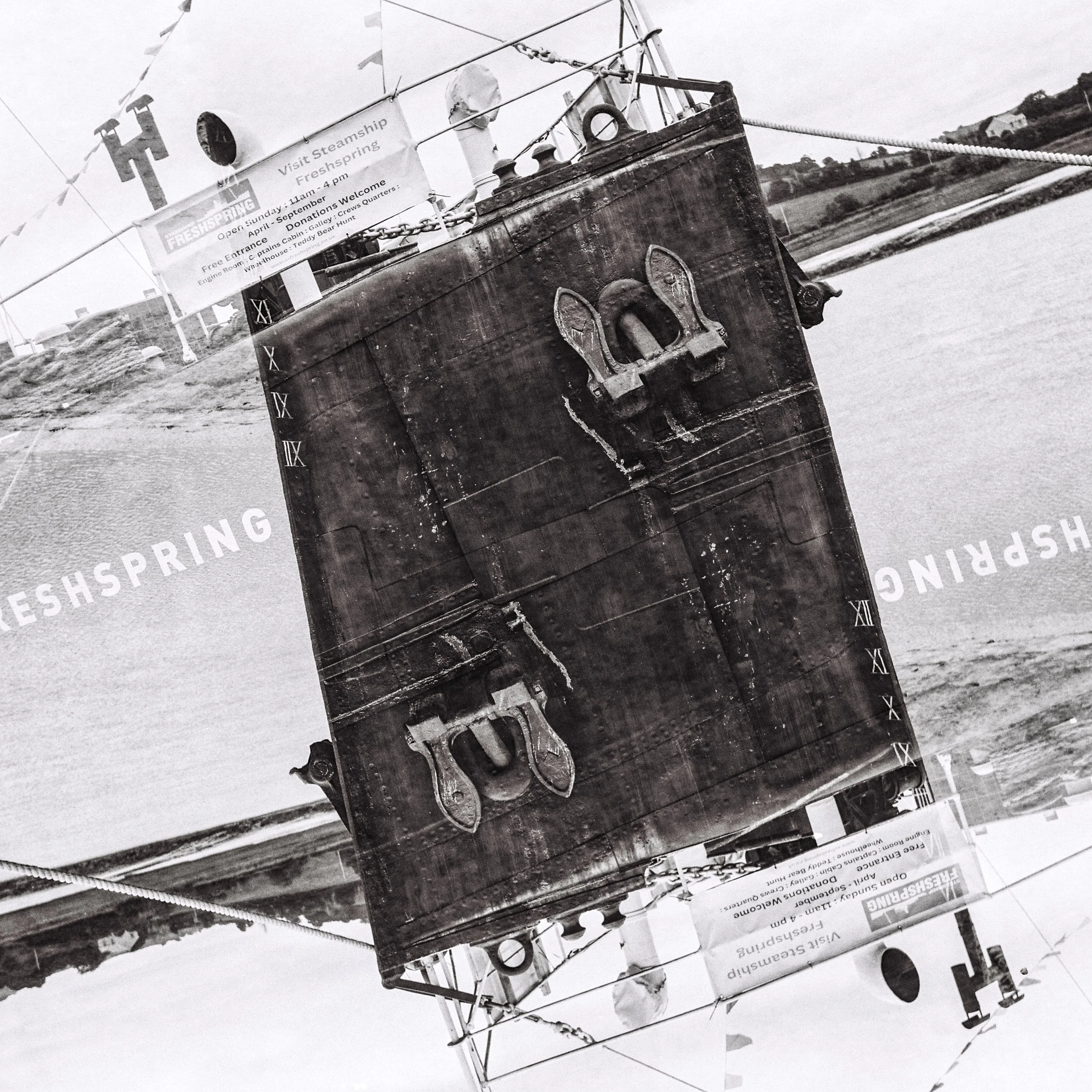
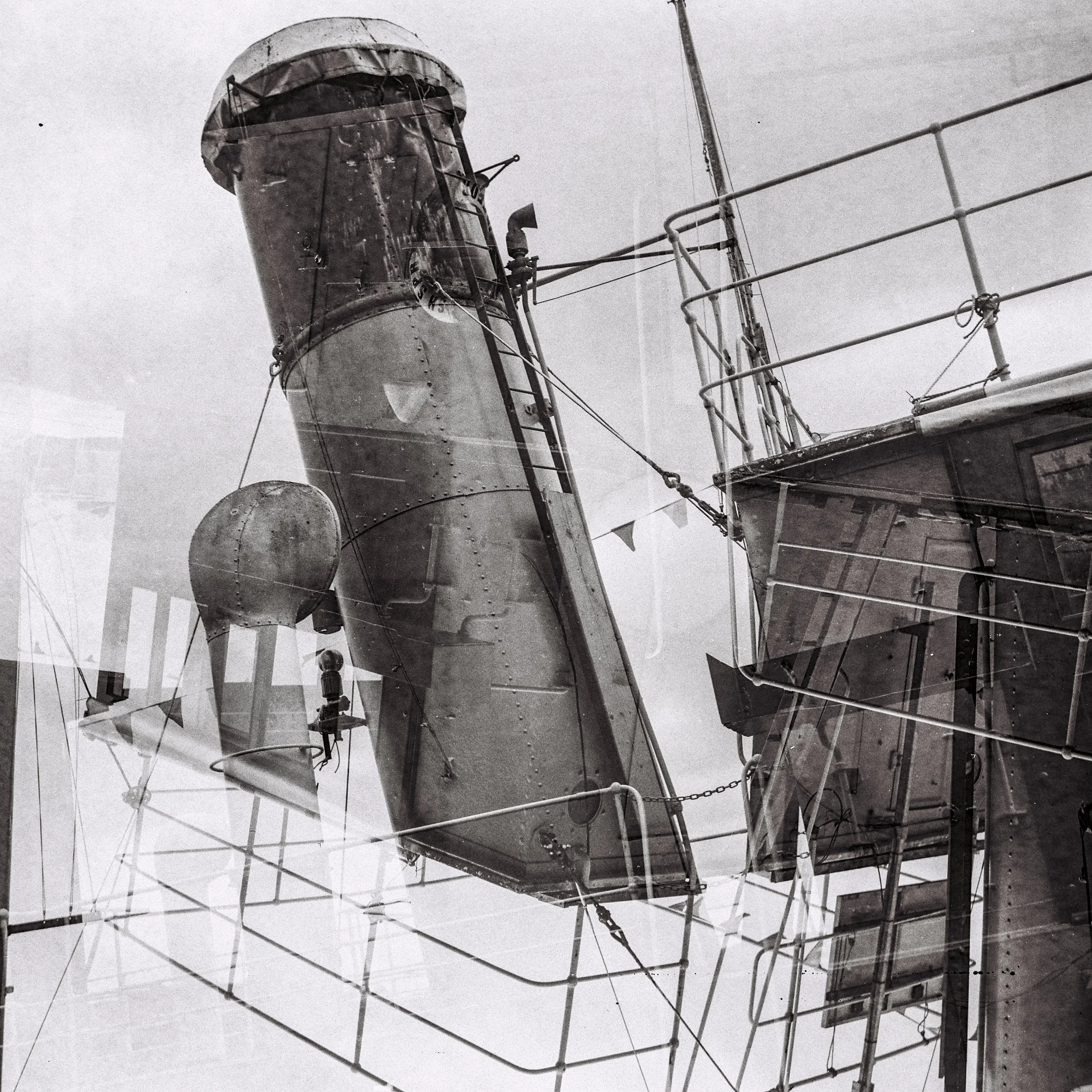
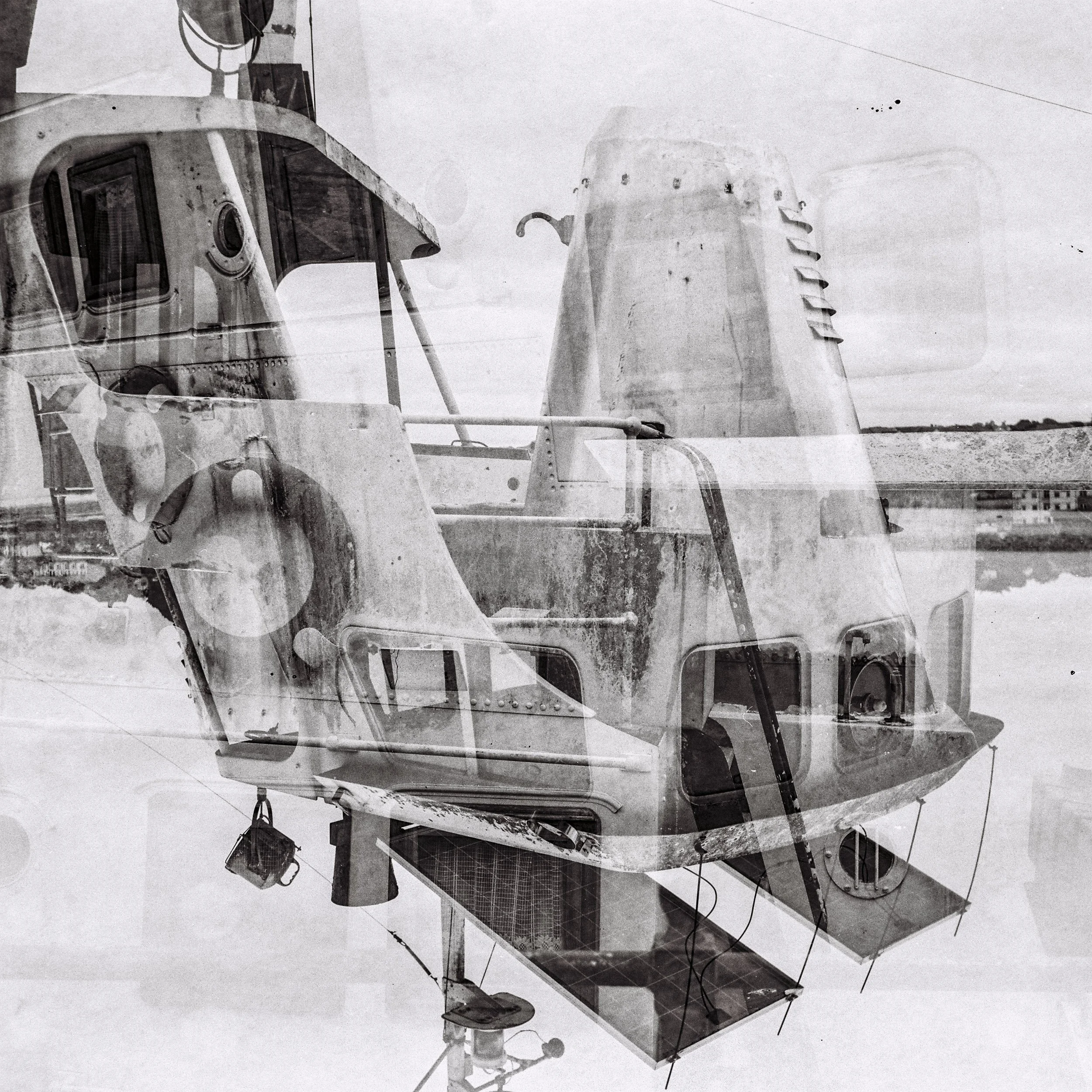
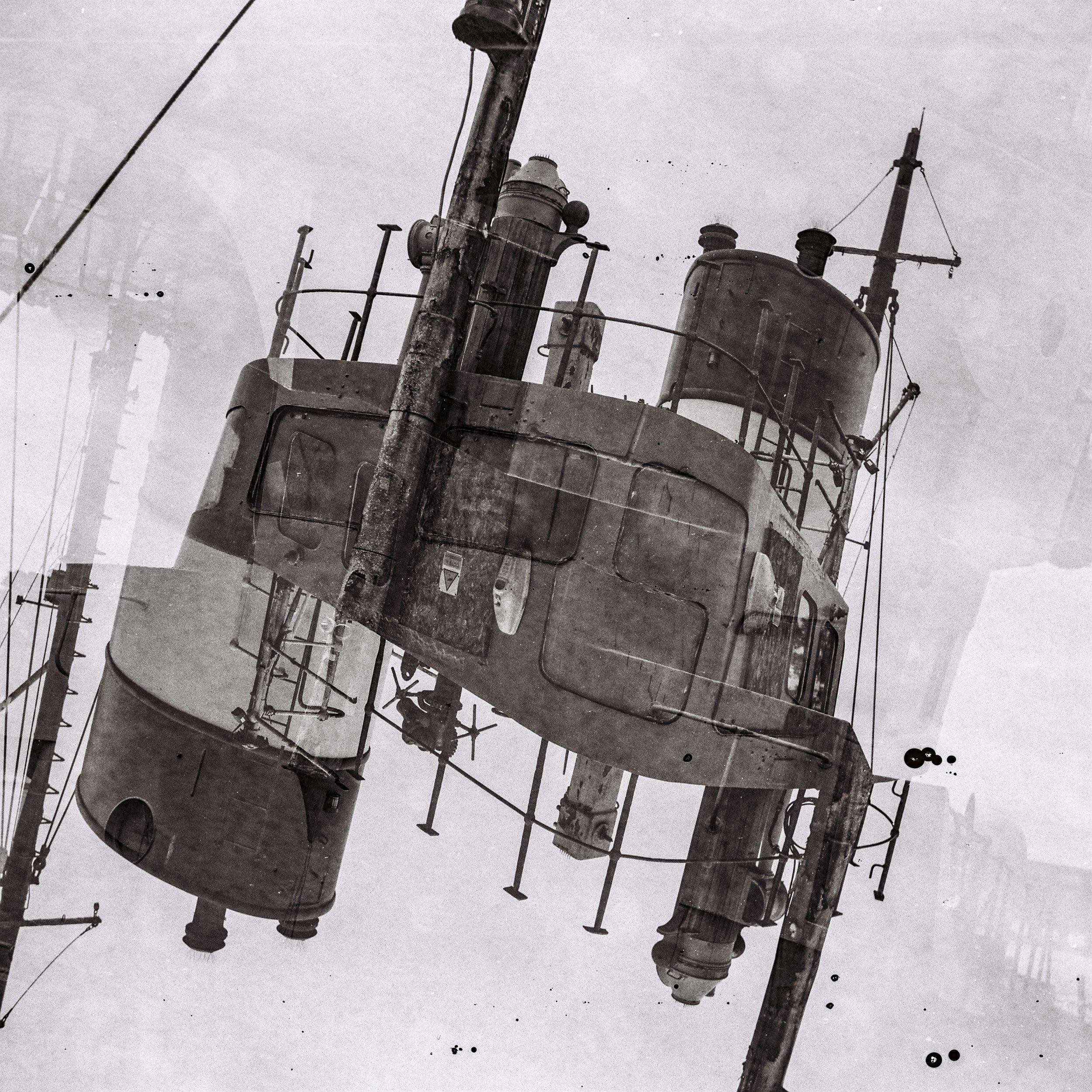
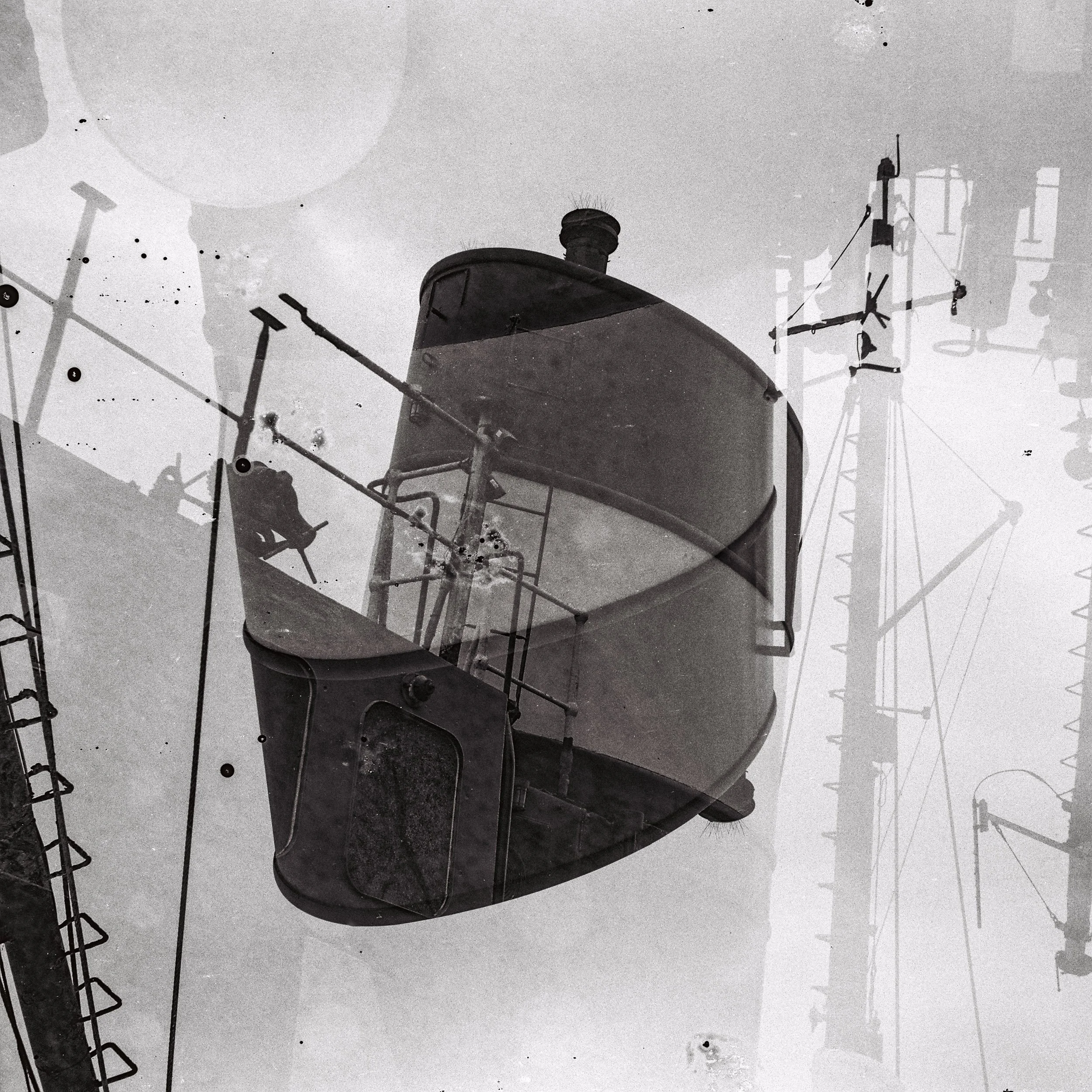
This is an ongoing series of photos which aims to provoke curiosity and enquiry into Britain’s maritime past. My approach is to create double-exposed images of ships found abandoned or undergoing renovation, all made in-camera using a 1950s breast camera. The output relies solely on judgement and happenchance.
An overview of British maritime history
As an island nation, Britain has long depended on maritime and naval power. Ships enabled trade, exploration, migration and communication, while the Royal Navy protected Britain’s trade routes whilst expanding the colonial and empirical ambitions of those in power.
To support Britain’s expanding maritime fleets, shipyards and dockyards were built across the country, employing thousands of skilled specialist workers.
From the Royal Dockyards of Portsmouth and Chatham, to the industrial shipyards of Dundee and Hull, maritime towns and cities have shaped Britain’s economy, culture and identity for centuries.
Few ships from any era can still be seen or visited by the public. The great majority of vessels built in Britain have long since been scrapped, wrecked upon the rocks or sunk at sea, out of sight and largely out of memory:
Database records and historical estimates suggest that hundreds of thousands of commercial, private and naval vessels were launched in Britain over the last 500 years.
The British Shipbuilding Database alone tracks roughly 80,000 large vessels from the mid-19th century onwards.
Historic ports such as Sunderland and the River Clyde built thousands more during the peak industrial era.
The remains of the oldest known boat tin the UK are held at Dover Museum in Kent. This Bronze Age vessel dates to around 1550 BC and is approximately 3,500 years old.
Only a fraction of Britain’s maritime achievement can be experienced today through surviving vessels such as the Golden Hinde, Cutty Sark, HMS Victory, SS Great Britain, HMS Warrior, RRS Discovery and HMS Trincomalee.
Other maritime fragments in the series
-
![An image of the Cultural Center.]()
Bideford, Devon, 2026
01
-
![An image of the Cultural Center.]()
Bideford, Devon, 2026
02
-
![An image of the Cultural Center.]()
Bideford, Devon, 2026
03
-
![]()
Bideford, Devon, 2026
04
-
![]()
Bideford, Devon, 2026
05
-
![]()
Bideford, Devon, 2026
06