Know thyself*
2025
England, UK
ONGOING PROJECT
I have only a few photos of myself and my siblings from our troubled family life.
What I do have in greater measure is memory. Not of sad days, but of those serendipitous moments that made me feel I was not alone, that I was important enough in this world of billions of people to be given a nudge to go this way or that way by some unknown force, higher power, or whatever that maybe… even if I chose to ignore them, which naively I often did.
So what would my photo album look like if i created one from memory?
Here are some works I have completed so far with this in mind.
*‘Know thyself’, is an ancient Greek maxim inscribed on the Temple of Apollo at Delphi. But long before I knew that fact, it was the school motto at my secondary modern school in Yorkshire. One of the few things I remember from those days.
From the series
-
![Memories]()
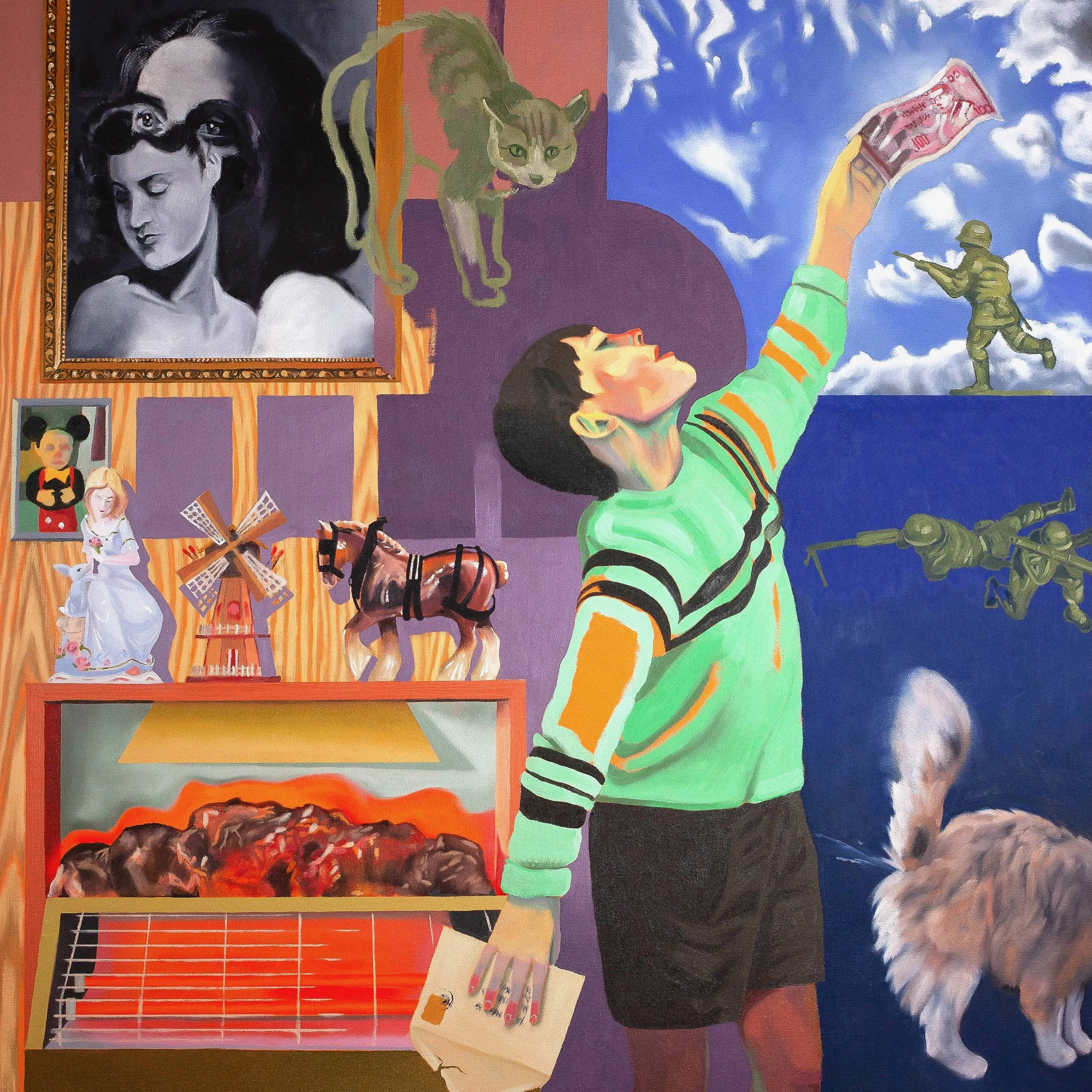
This Is Not The Place
On one particular birthday in the late 70s, I received a foreign banknote inside a card from my older brother. I believe it was from a country in South East Asia.
Holding this exquisite currency up to the sun to see its watermark and fine printing, i realised that there was much more to this life than this place which some might call home – full of mock wallpaper, mantlepiece ornaments and fakery.
I believe this was the very first time I understood the importance of faith and fate.
My mum felt obliged to tell me that i couldn’t spend that sort of money here… which I had already figured out.
What grabbed me wasn’t about the economic value of the note, but the sense it offered of a future someplace else.
Oil on canvas, 2026
90 × 90cm
-
![Dreams]()
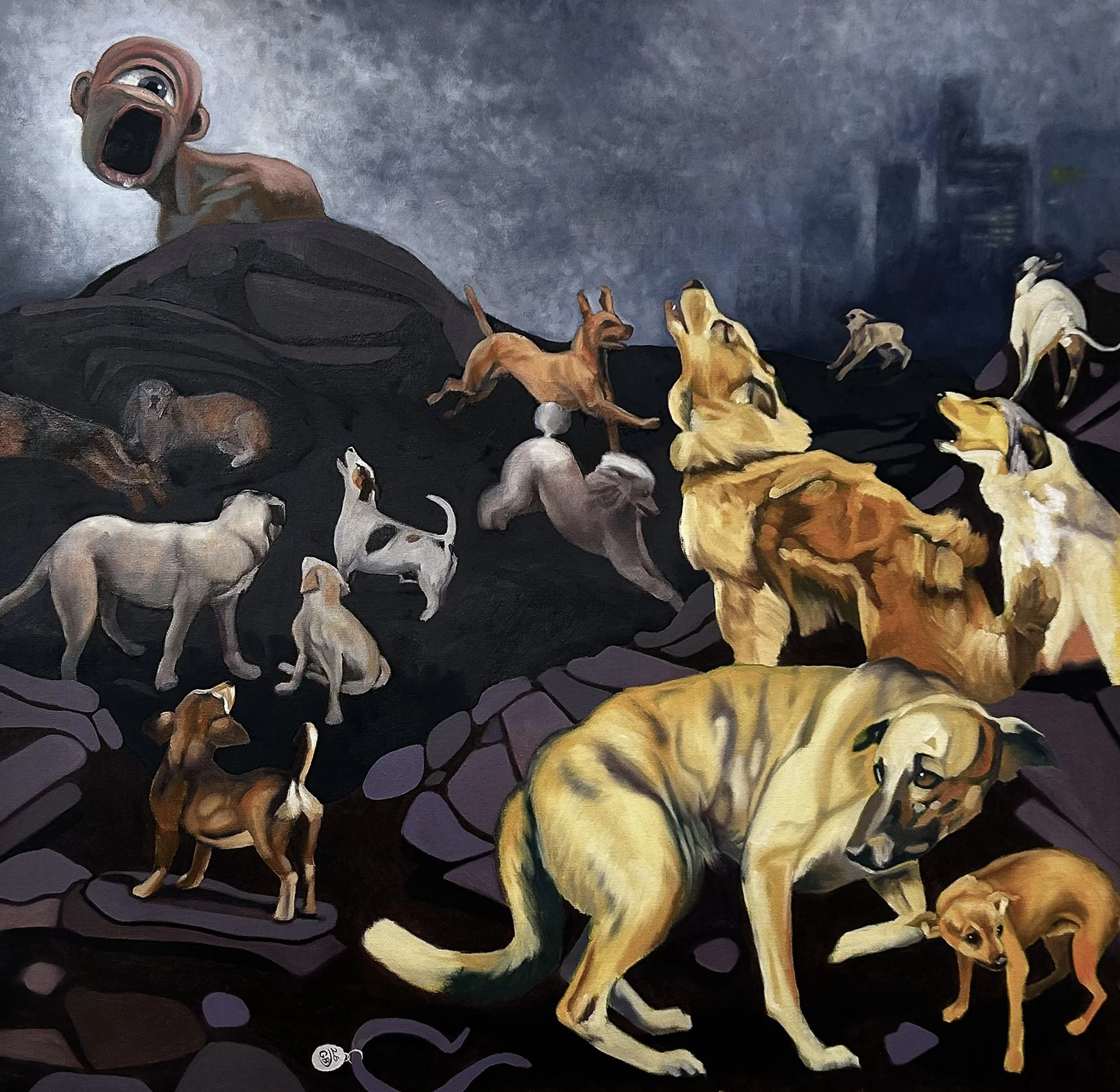
Wild Ones
I don’t dream often. But in Devon earlier this year, I thought I was back in my Walthamstow home, awoken once again by the chattering foxes who had dug a den in the neighbours garden. But what i found were feral dogs that just to wanted to be free and wild… not subservient to humans or inbred to suit their aesthetic tastes.
My interpretation of this dream was about letting go of any presumptions of how I thought things should be, getting out of my own way and tuning into my own nature, using my head less and involving my heart much more.
It’s a method and a habit I learnt during my years as a graphic designer.
Oil on canvas, 2026
90 ×90cm
-
![Terror]()
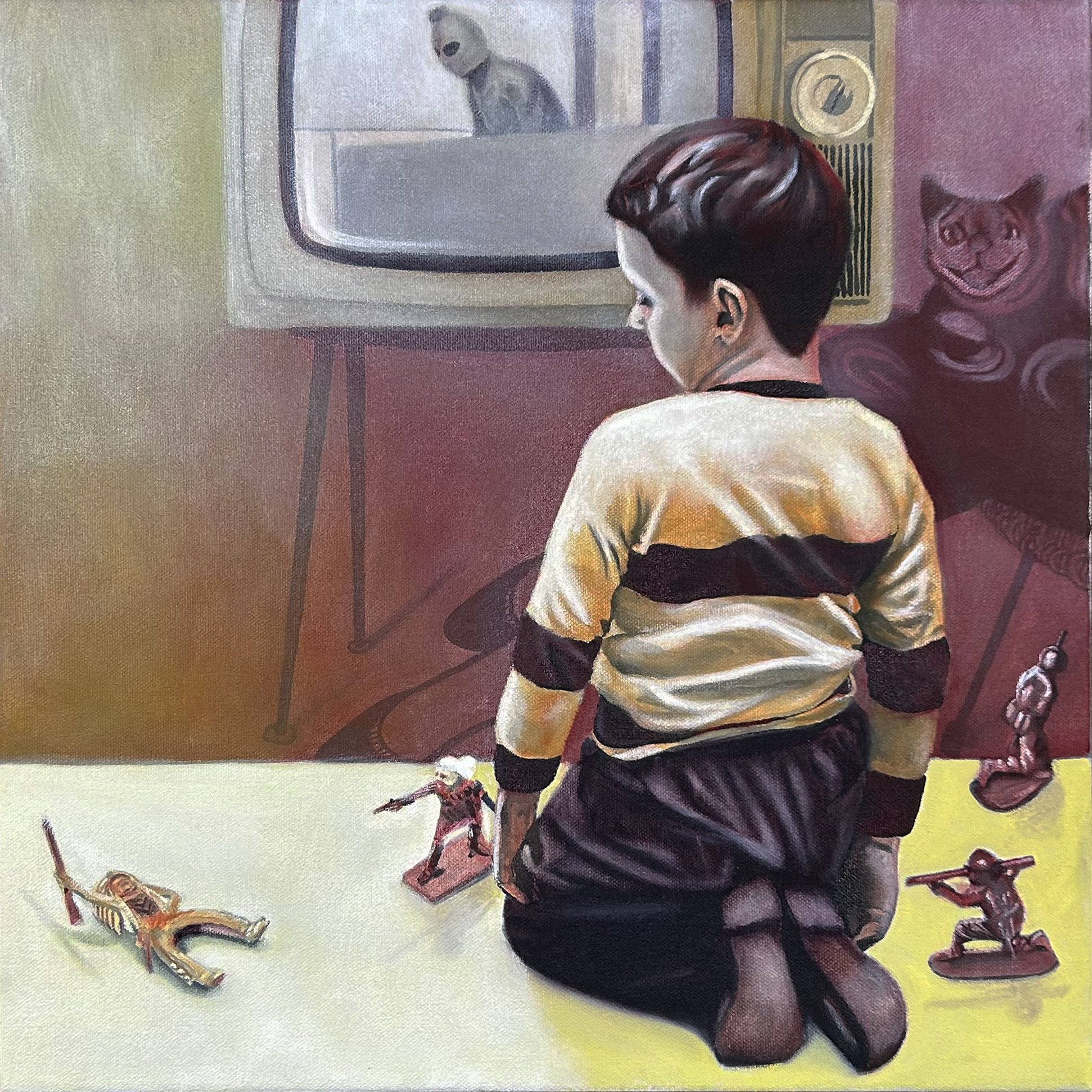
A Little Terror in 1972
I am no longer surprised at what nations and people do to others when reading or watching the news. I’m actually more shocked and saddened, that such atrocities still continue.
Television and photojournalism, whilst bringing evidence home to the masses, has not made any significant difference in the longer term.
The news media - whether state or publicy owned, depending the country you live in - would inform you who were the goodies and the baddies. Just look at the old Western movies that portrayed the indigenous tribes of America as savages.
And having parents who didn’t explain what I was witnessing on the television in 1972, didn’t help me to understand the what and why on any given incident.
Oil on canvas, 2026
90 × 90cm